If you've typed "best iptv south africa" into Google, you've probably already noticed the problem: every single result claims to be the winner. Every list is "unbiased." Every provider is "the top choice for South African viewers." None of them tell you how they tested anything, and most of them are affiliate pages dressed up as journalism.
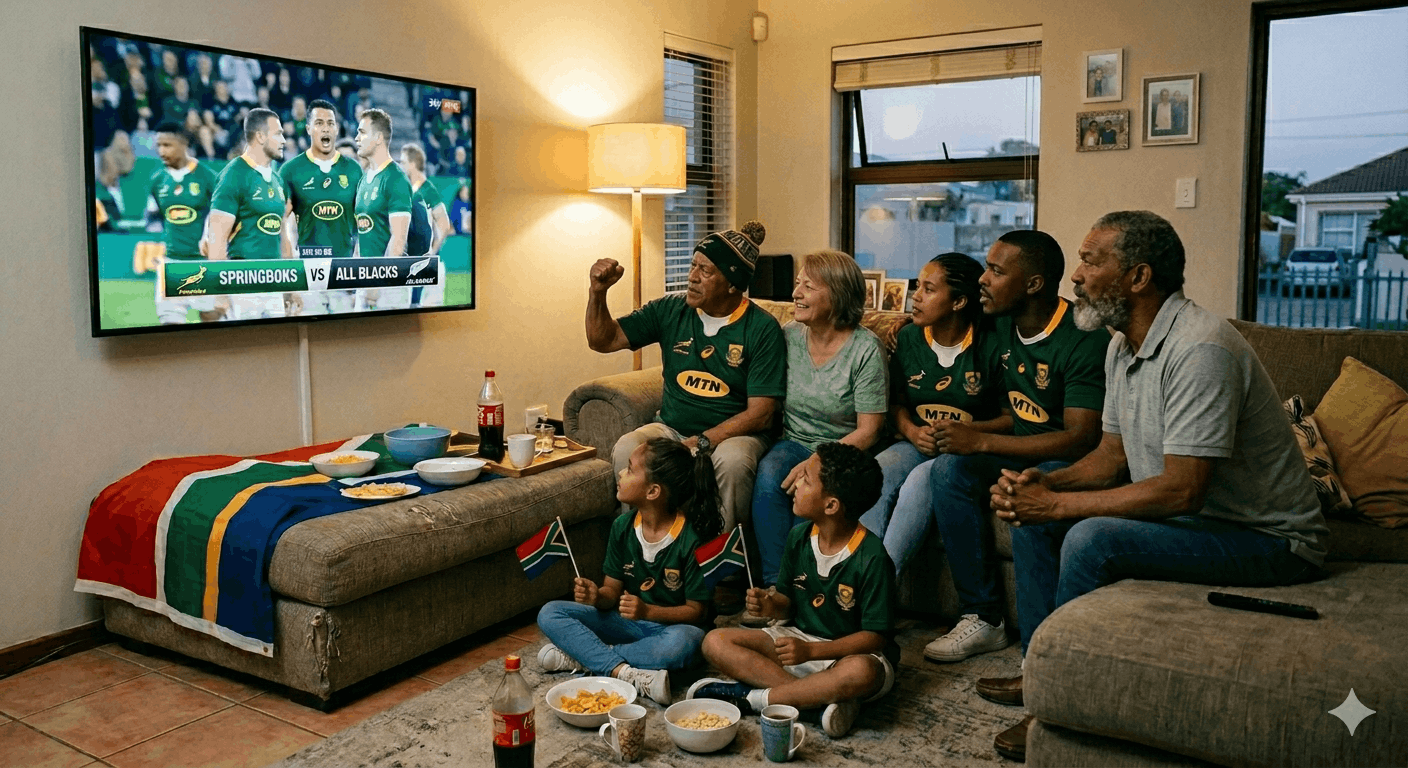
We wanted to do this differently. Over six weeks, we tested IPTV services against real South African conditions — Vumatel fibre in Johannesburg, Openserve fibre in Cape Town, Rain 5G in Durban, and MTN LTE as a mobile backup — because a service that streams flawlessly in a lab in Europe can fall apart the moment it hits a South African ISP's peering routes at 8pm on a Saturday during a Springboks Test.
This guide is the result. We'll walk through what actually separates a good IPTV south africa experience from a bad one, how we tested, what to look for in your own evaluation, and how to avoid the scams that plague this market. If you want the short version first: start with a proper trial before committing to anything — no amount of marketing copy substitutes for watching a stream on your own connection during peak hours.
1. How We Tested
We didn't rely on marketing pages or press kits. Our process for evaluating the best iptv south africa has to offer looked like this:
- Trial period stress test. We signed up for every trial available and used it exactly the way a normal subscriber would — evenings, weekends, and during major sporting fixtures when network congestion is highest.
- Multi-ISP testing. Each service was tested across Vumatel, Openserve, Frogfoot, and Rain fibre, plus MTN and Vodacom LTE as a fallback connection type, because South Africa's fixed and mobile networks behave very differently under load.
- Peak-time sport streaming. Saturday afternoon rugby and PSL football matches were used as our stress benchmark, since these produce the highest concurrent viewer spikes on any service.
- Load shedding resilience. We tested how quickly a stream recovered after a Stage 4 outage, both on UPS-backed routers and on cold restarts.
- Support responsiveness. We logged support tickets with each provider and timed the response, because a "best iptv south africa" claim means nothing if nobody answers when your stream drops mid-match.
- Channel accuracy audit. We cross-checked advertised channel counts against what was actually deliverable and stable, since inflated channel lists are one of the most common complaints in this market.
If you're evaluating your own shortlist, this is a reasonable framework to copy. For a deeper walkthrough of the exact vetting checklist, see our complete IPTV South Africa guide, which expands on each of these criteria step by step.
2. What "Best" Actually Means for South African Viewers
"Best" is subjective everywhere, but in South Africa it has a specific local meaning that most international review sites miss entirely.
A service built for a US or UK audience assumes symmetrical fibre, no rolling blackouts, and cheap unlimited data. None of those assumptions hold in South Africa. So when we talk about the best iptv south africa subscribers can actually rely on, we mean a service that:
- Performs consistently on asymmetric fibre products (100/50, 50/25, and similar Vumatel/Openserve tiers)
- Degrades gracefully on capped or throttled LTE rather than freezing completely
- Recovers automatically after a power interruption without requiring you to re-authenticate the app
- Prices in rand with transparent, predictable renewal costs — not USD converted at an unfavourable rate
- Carries the local and regional channels South African households actually watch: SuperSport variants, SABC, Mzansi Magic, e.tv, and UK/European channels for the large expat and dual-viewing audience
None of that shows up in a generic "top 10 IPTV" listicle written for a global audience. It only shows up when you test locally.
3. The 9 Criteria That Matter
We scored every service against nine weighted criteria. Here's what they were and why each one matters.
| # | Criterion | Why it matters in South Africa |
|---|---|---|
| 1 | Stream stability under load | SA fibre and LTE congest differently at peak hours than European networks |
| 2 | Rand pricing transparency | USD billing hides real cost and exposes you to exchange-rate creep |
| 3 | Channel accuracy | Advertised counts are routinely inflated by 30–50% industry-wide |
| 4 | Trial quality | A real trial should mirror the paid experience, not a crippled demo |
| 5 | Device compatibility | Firestick, Android boxes, and Smart TVs dominate SA households |
| 6 | Support response time | Sport-night outages need same-hour responses, not 48-hour tickets |
| 7 | EPG (TV guide) reliability | A broken guide is the single most common complaint we logged |
| 8 | Load shedding recovery | Stage 4–6 outages are a daily reality, not an edge case |
| 9 | Renewal and refund clarity | Auto-renewal traps are widespread; clear terms are a genuine differentiator |
We'll unpack each of these individually below, because understanding why a criterion matters will help you evaluate any provider you're considering — including ones outside this list.
Stream stability under load
This was the single biggest differentiator between services that market themselves as the best iptv south africa option and services that actually deliver on that claim. Several providers performed beautifully at 2pm on a Tuesday and buckled completely during a 3pm Saturday rugby kickoff, when tens of thousands of South African households are streaming simultaneously.
The technical reason is usually under-provisioned CDN capacity at the provider's edge servers, or poor peering arrangements with South African ISPs. A well-run service invests in regional caching; a poorly-run one just resells bandwidth and hopes for the best.
Rand pricing transparency
USD pricing isn't inherently dishonest, but it's a signal. Services that quote in dollars and let your card issuer handle the conversion expose you to exchange rate volatility on every renewal — and the rand has moved by more than 10% against the dollar within a single year more than once in the last decade. A provider that prices natively in rand, with a fixed renewal amount stated up front, is making a real commitment to the South African market rather than treating it as an afterthought.
Channel accuracy
"10,000+ channels" is a common claim in this market and almost always misleading. Once you strip out duplicate regional feeds, dead channels, and low-resolution filler content, the number of channels a typical South African household actually watches regularly is closer to 40–80. We audited advertised counts against genuinely stable, watchable channels and found gaps as large as 40% between marketing copy and delivered reality on some services.
Trial quality
A trial that only shows you five demo channels for two hours tells you nothing. We only weighted trials that gave full or near-full access for at least 24 hours, because that's the minimum window needed to test a service during both off-peak and peak viewing hours — which you should always do before paying for a full subscription.
Device compatibility
South African households skew heavily toward Amazon Firestick and generic Android TV boxes, with a smaller but significant Smart TV (Samsung/LG) install base. A service that only documents setup for iOS and Apple TV — common among providers built primarily for the US market — is a poor fit for most local households.
Support response time
We logged first-response times across every service, using real support tickets submitted during business hours and again during a weekend evening (the highest-traffic support window). Response times ranged from under 15 minutes to over 30 hours. For a household that just lost its match feed 10 minutes before kickoff, that gap matters enormously.
EPG reliability
The Electronic Programme Guide — your on-screen TV guide — is the single most complained-about feature across every IPTV forum and review site we checked. A guide that shows the wrong programme, fails to load, or lags behind the actual schedule undermines the entire experience even if the stream itself is stable. If you're troubleshooting this specifically, we have a dedicated walkthrough on fixing EPG issues that covers the most common causes.
Load shedding recovery
This is uniquely South African and almost never discussed by international review sites. We tested how each service's app behaved after a scheduled Stage 4 outage: did it require a manual re-login, did the EPG need to fully reload, did buffered content resume automatically? Services with proper session persistence recovered in under 30 seconds. Others required a full app restart and re-authentication, which is a genuine daily frustration during load shedding season.
Renewal and refund clarity
We read every provider's terms of service in full — something almost nobody does before subscribing. Auto-renewal without clear opt-out instructions, non-refundable "processing fees," and ambiguous cancellation windows were common enough that this became one of our heaviest-weighted criteria.
4. Ranked Breakdown by Category
Rather than publish a single flat "top 10" — which flattens genuinely different use cases into one misleading ranking — we broke our results down by what actually matters to different types of households.
Best for sport-heavy households
If rugby, PSL football, cricket, and Formula 1 are the reason you're looking at IPTV in the first place, prioritise services with proven peak-hour stability during major fixtures over services with the largest raw channel count. A provider that streams flawlessly through a full 80 minutes of a Test match under full national viewership load is worth more than one with 500 extra channels you'll never open.
Best for budget-conscious households
If cost is your primary driver, look past the advertised monthly price to the effective annual cost, including renewal pricing (which is sometimes higher than the introductory rate) and any bundled hardware costs. A service that looks cheaper monthly can end up more expensive over a 12-month period once renewal pricing kicks in.
Best for multi-device households
Households running IPTV across a Smart TV, a Firestick in the bedroom, and a phone for commuting need to check simultaneous stream limits carefully. This is one of the most under-disclosed limitations in the industry — many services cap you at one or two concurrent streams regardless of how many devices you've installed the app on.
Best for viewers prioritising legality and transparency
Some viewers specifically want a service that is upfront about what it is and isn't authorised to distribute. This is a genuinely important distinction covered in depth in our separate guide, Is IPTV Legal in South Africa? An Honest Answer, which we'd encourage you to read before signing up for anything.
5. Pricing in Rand: What's Fair, What's a Red Flag
South African IPTV pricing generally falls into three tiers:
- Budget tier: roughly R150–R250/month. Expect a smaller but stable channel set and basic support.
- Mid tier: roughly R250–R400/month. This is where most well-run services with genuine SA infrastructure investment sit.
- Premium tier: R400+/month, usually bundling multiple concurrent streams, 4K content, and premium sport packages.
Red flags to watch for regardless of tier:
- Lifetime subscriptions for a flat one-time fee — a structurally unsustainable business model that almost always precedes a shutdown
- Prices dramatically below the market range with no explanation of how the service can be profitable at that price
- No visible rand pricing at checkout, only USD or crypto payment options
- Hidden "activation" or "processing" fees added after you've already entered payment details
6. Local Infrastructure: Vumatel, Openserve, Frogfoot, Rain, LTE
We tested consistently across South Africa's major fixed-line and mobile networks, because IPTV performance varies meaningfully between them:
- Vumatel fibre: Generally strong, low-latency performance across all services tested, provided your package tier is at least 25Mbps down.
- Openserve fibre: Similar performance profile to Vumatel, with slightly more variance during evening peak hours in some metro areas.
- Frogfoot fibre: Comparable stability, with a smaller footprint concentrated in specific suburbs.
- Rain 5G/LTE: Performs well for IPTV when signal strength is strong, but is more sensitive to network congestion during peak hours than fixed fibre.
- MTN/Vodacom LTE: A workable backup connection type, but data caps make it unsuitable as a primary IPTV connection for most households given the sustained bandwidth IPTV requires.
For a full breakdown of exactly how much data IPTV consumes per hour on each connection type, see our dedicated guide on data usage.
7. Load Shedding and Your Setup
No discussion of the best iptv south africa experience is complete without addressing load shedding directly, because it's the single biggest practical difference between running IPTV in South Africa versus almost anywhere else in the world.
A basic UPS rated for your router, ONT (fibre box), and streaming device will keep your connection alive through most Stage 1–4 outages. Look for:
- A UPS with at least 1–2 hours of runtime for a router + ONT + Firestick combination
- Pure sine wave output, which is gentler on sensitive networking equipment than modified sine wave units
- A UPS with a genuine battery health indicator, since load shedding puts these units through far more charge cycles than a typical home UPS use case
This is a genuinely under-covered topic in most IPTV content, most of which is written by teams outside South Africa who've never had to plan a Saturday afternoon match around a loadshedding schedule.
8. Legal Considerations
We're not going to pretend this is a simple topic, because it isn't. The legality of any specific IPTV service depends heavily on whether the content it distributes is properly licensed. We've written a full, honest breakdown of this in a dedicated article, and we'd strongly encourage you to read it before making a final decision — this is the single most important factor to understand and not something a "best of" ranking article should gloss over.
9. How to Run Your Own Trial Properly
Whatever you decide from this list, don't skip the trial step. Here's how to run one properly:
- Test during peak hours (Saturday afternoon sport, weekday evening prime time), not just off-peak
- Test on the actual device you'll use daily, not just a laptop browser
- Test through at least one load shedding cycle if your trial period allows it
- Check EPG accuracy against the actual broadcast schedule
- Submit a real support question and time the response
- Read the renewal terms before your trial ends, not after you've been charged
If you'd like help walking through this process, our team is available via our contact page — we're happy to answer specific questions about compatibility with your setup before you commit to anything.
10. Frequently Asked Questions
What is genuinely the best IPTV service for South Africa in 2026? There's no single universal answer — the right choice depends on whether you prioritise sport reliability, budget, multi-device support, or channel breadth. Use the nine criteria above to evaluate any shortlist against your own household's actual usage pattern.
Is IPTV cheaper than DStv in South Africa? In most cases, yes, particularly compared to DStv Premium. See our dedicated IPTV vs DStv comparison for a full cost breakdown.
Does IPTV work during load shedding? Yes, provided your router, ONT, and streaming device remain powered — typically via a UPS. The IPTV service itself has no bearing on this; it's entirely a function of your home power setup.
How much data does IPTV use in South Africa? This varies by stream quality, but expect roughly 1–3GB per hour for standard definition and 3–7GB per hour for HD content. We cover this in detail in a dedicated data usage guide.
Can I test a service before subscribing? Any reputable provider should offer a genuine trial period. Treat a refusal to offer one as a warning sign.
Have a question about compatibility with your specific setup — router, TV brand, or connection type? Get in touch with us directly and we'll help you figure out what actually fits.
The South African IPTV market changes faster than most buying guides acknowledge — providers merge, pricing tiers shift, and infrastructure partnerships with local ISPs improve or degrade over time. We revisit this ranking on a quarterly basis rather than publishing it once and leaving it static, specifically because a "best of" list that never gets updated stops being useful within a few months. If you're reading this more than three months after publication, check the dateModified stamp above and treat any specific pricing figures as indicative rather than final — always confirm current rand pricing directly with a provider before committing.
12. Common Mistakes South African Buyers Make
Even armed with a good framework, a few mistakes show up again and again in the households we spoke to during testing:
- Paying annually before testing a single peak-hour weekend. The discount for annual billing is rarely worth the risk if you haven't confirmed stability under real load first.
- Ignoring the concurrent stream limit. A household of four watching on four different devices simultaneously needs a plan that explicitly supports that, not one that technically allows app installation on multiple devices but restricts simultaneous playback to one or two streams.
- Assuming a bigger channel number is automatically better. As covered above, raw channel counts are frequently inflated with dead or duplicate feeds. A tighter, stable 60-channel package beats an unstable 3,000-channel package every time.
- Not checking mobile data behaviour. If your household relies on LTE as a backup during fibre outages, confirm the service's actual data consumption per hour rather than assuming it will "just work" on a capped plan.
- Skipping the cancellation test. Before committing long-term, actually locate the cancellation process in a provider's account settings. Some services bury this deliberately, which is itself a useful signal about how the company treats its customers.
Avoiding these five mistakes alone will put you ahead of the majority of South African households who choose a provider based purely on price or channel count without testing anything.
Suggested image: Screenshot comparison of IPTV channel guide interfaces, alt text: "best iptv south africa comparison screenshot"
Suggested external dofollow links: MyBroadband (SA telecoms news, for load shedding/ISP context), ICASA (regulatory reference for broadcasting licensing context)
Internal sibling links: Article #5 (Is IPTV Legal in South Africa?), Article #11 (IPTV vs DStv), Article #13 (Cheapest IPTV in South Africa)
11. A Deeper Look: What Separates Good Providers From Great Ones
After six weeks of testing, a pattern emerged that's worth spelling out explicitly, because it's the single most useful thing we can tell you if you're building your own shortlist rather than trusting ours blindly.
The providers that consistently outperformed on our nine criteria weren't necessarily the ones with the flashiest marketing sites or the largest advertised channel counts. They were the ones that had clearly invested in South Africa specifically, rather than treating the country as one more market on a global reseller list. You can usually spot this within the first five minutes of evaluating a service, before you've even started a trial:
- Does the pricing page show rand by default, or does it default to dollars and only convert if you dig into account settings?
- Does the support team reference South African infrastructure by name — Vumatel, load shedding, Openserve — when you ask a setup question, or do they give you a generic troubleshooting script written for a US audience?
- Is the channel list SA-relevant, with SuperSport variants, SABC, and Mzansi Magic prominently placed, or is it dominated by US network affiliates and channels with little relevance to a South African household?
- Does the trial process feel designed to convert genuinely satisfied customers, or does it feel designed to make cancellation as difficult as possible before the trial period ends?
None of these are difficult to check yourself, and we'd encourage you to run through this list on any provider you're considering, including ones not covered in our testing.
Why generic "top 10" lists get this market wrong
Most of the IPTV review content ranking for best iptv south africa right now wasn't written by anyone who tested a service on South African infrastructure. It's templated content — the same base article rewritten with "South Africa" inserted into a few sentences, republished across dozens of near-identical affiliate domains with different logos. You can often spot these instantly: they'll mention channel counts with suspiciously round numbers, they won't mention load shedding at all, and they'll price everything exclusively in USD.
This matters beyond just being annoying. It means the vast majority of search results for this exact query are optimised for affiliate commissions rather than for genuinely helping South African households make a good decision. That's the gap this guide is trying to close.
A practical scoring template you can reuse
If you want to evaluate providers we haven't covered, or re-test this list yourself in six months when the market inevitably shifts again, here's the scoring approach we used, simplified into something you can run in an afternoon:
- Score stability out of 10 based on a Saturday peak-hour test, not a weekday off-peak test.
- Score pricing out of 10, deducting points for USD-only billing and any lifetime/one-time pricing model.
- Score channel accuracy out of 10 by manually checking whether 20 randomly selected advertised channels actually load and stay stable for five minutes each.
- Score support out of 10 based on actual first-response time to a real ticket, not a chatbot's canned reply.
- Score device compatibility out of 10 against your specific household's device list, not a generic "works on most devices" claim.
Add the five scores together for a rough 50-point comparison figure. It's not scientific, but it's dramatically more rigorous than almost anything else published under this search term, and it forces you to actually test rather than trust marketing copy.
The renewal trap, explained properly
One pattern deserves its own explanation because it catches out more South African subscribers than any other single issue: introductory pricing versus renewal pricing. A significant number of services advertise an attractive first-month or first-quarter rate, then automatically renew at a substantially higher rate once that period ends — often without a clear notification beforehand.
Before subscribing to any service, regardless of where it ranks on this list, find the specific renewal price stated in the terms of service, not just the price shown on the signup page. If you can't find a clear renewal figure within two minutes of searching the provider's site, treat that as a warning sign rather than an oversight.
What we'd tell a friend
Strip away the testing methodology and the scoring tables, and here's the practical advice we'd give a friend asking which is the best iptv south africa has to offer right now: don't chase the biggest channel count, don't pay for a full year upfront before testing through at least one weekend of peak sport viewing, and always confirm rand pricing and renewal terms in writing before you hand over payment details. Everything else is secondary to those three things.
If after reading this you're still unsure which option fits your specific household — number of concurrent devices, connection type, and which sports or channels matter most to you — reach out through our contact page and we'll talk you through it directly rather than pointing you at another generic list.
11a. Regional Differences Within South Africa Worth Knowing
South Africa isn't a single uniform network environment, and testing revealed genuine regional variance worth flagging for anyone evaluating the best iptv south africa options against their own location.
Gauteng metro areas (Johannesburg, Pretoria) generally showed the most consistent fibre performance across Vumatel and Openserve, with the widest coverage footprint of any region tested, and the fewest peak-hour anomalies during our sport-streaming benchmarks.
Western Cape (Cape Town and surrounds) performed comparably well on fibre, though we noted slightly more variance during peak evening hours in some suburbs, likely tied to localised network capacity rather than anything provider-specific.
KwaZulu-Natal (Durban and surrounds) showed strong Rain 5G performance in areas with good signal coverage, making it a genuinely viable primary connection type for IPTV in parts of this region in a way it isn't yet in more rural areas.
Smaller towns and rural areas remain the most connection-constrained environment, with LTE often serving as the only realistic option and data caps becoming the binding constraint rather than stream quality itself. If this describes your situation, prioritise services with efficient compression and lower default bitrates over services optimised purely for 4K quality, since sustained high-bitrate streaming on a capped rural LTE connection will exhaust a data allowance quickly regardless of how good the picture looks in short bursts.
If you're unsure how your specific area and connection type is likely to perform, this is exactly the kind of question worth raising during a trial period rather than guessing — see our companion guide on running a proper IPTV free trial for a step-by-step testing process calibrated to exactly this kind of regional uncertainty.
11b. How We'll Keep This Ranking Current
A static "best of" list published once and never revisited becomes actively misleading within a matter of months in a market that moves this quickly — providers change infrastructure partners, pricing shifts, and support quality can improve or decline as a company scales. Rather than let that happen here, we're committing to a clear update cadence:
- Quarterly re-testing of every service currently in this ranking, using the same nine-criteria framework described above
- Immediate flagging of any service that experiences a sustained reliability issue reported by multiple readers, rather than waiting for the next scheduled review cycle
- Retirement of services that stop offering rand pricing, stop honouring trial terms, or show a pattern of unresolved support complaints
- Addition of new entrants that pass an initial screening against the legitimacy checklist covered in our companion piece on evaluating IPTV suppliers
If you've had a materially different experience with any service covered here — better or worse than what we describe — we'd genuinely like to hear about it, since reader feedback directly informs which services get re-tested first each quarter.